


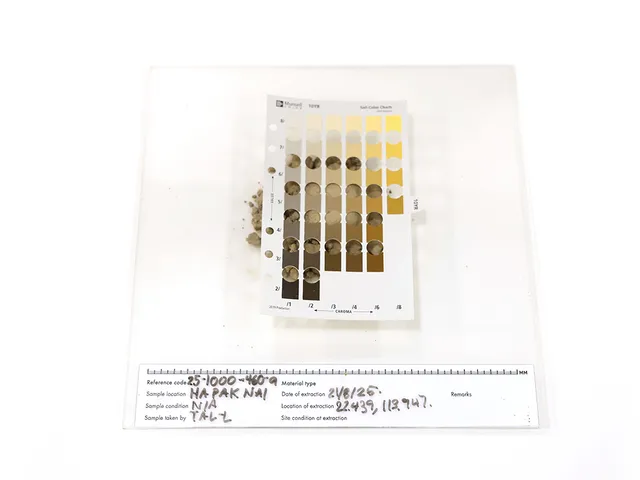
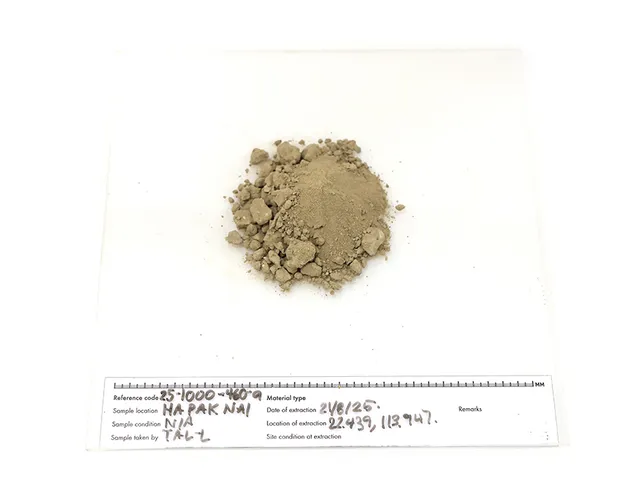

Ha Pak Nai Loamy Sand
Soil / Soil based (organic/mineral)
25-1000-460-a
TAL-L
21 Aug 2025 (Extracted)
Intact
This summer, as part of the ‘Material Ecologies: Local Practices and Global Impacts’ course, we partnered with The Nature Conservancy (TNC) at Ha Pak Nai, Hong Kong, to explore the oyster farming landscape in the heart of Shenzhen Bay. Our exploration focused on the material impacts of human activities, including local waste disposal, intensive oyster aquaculture, and rapid urban development that threaten vital habitats like mangroves and mudflats, nestled between the growing metropolises of Shenzhen and Hong Kong.
TNC’s “Save Our Shells” initiative is dedicated to restoring oyster reef habitats lost to overharvesting and pollution. Historically, oyster farmers used scattered concrete poles to cultivate oysters, a practice that’s evolved over time. While modern floating raft systems have improved efficiency, they’ve also contributed to declining oyster populations.
Together with TNC, we rolled up our sleeves—literally! We navigated the mudflats, collecting and repurposing concrete poles as anchoring structures for new oyster reefs. This material-based approach promotes a cyclical recovery, breathing new life into these vital ecosystems.
For more information about the TNC’s “Save Our Shell” programmes and to also get involved, please visit and stay tuned with @tnc_hk
22.4398, 113.94756
22.4398004, 113.9475691
<20 cm
< 35°
Mangrove / swamp
10YR 6/3
Organic Matter: 0.0 %
Coarse: 0.0 %
Sand: 81.0 %
Silt: 19.0 %
Clay: 0.0 %